
Cuba's New Solar Duty-Free Rule: What Families Need to Know
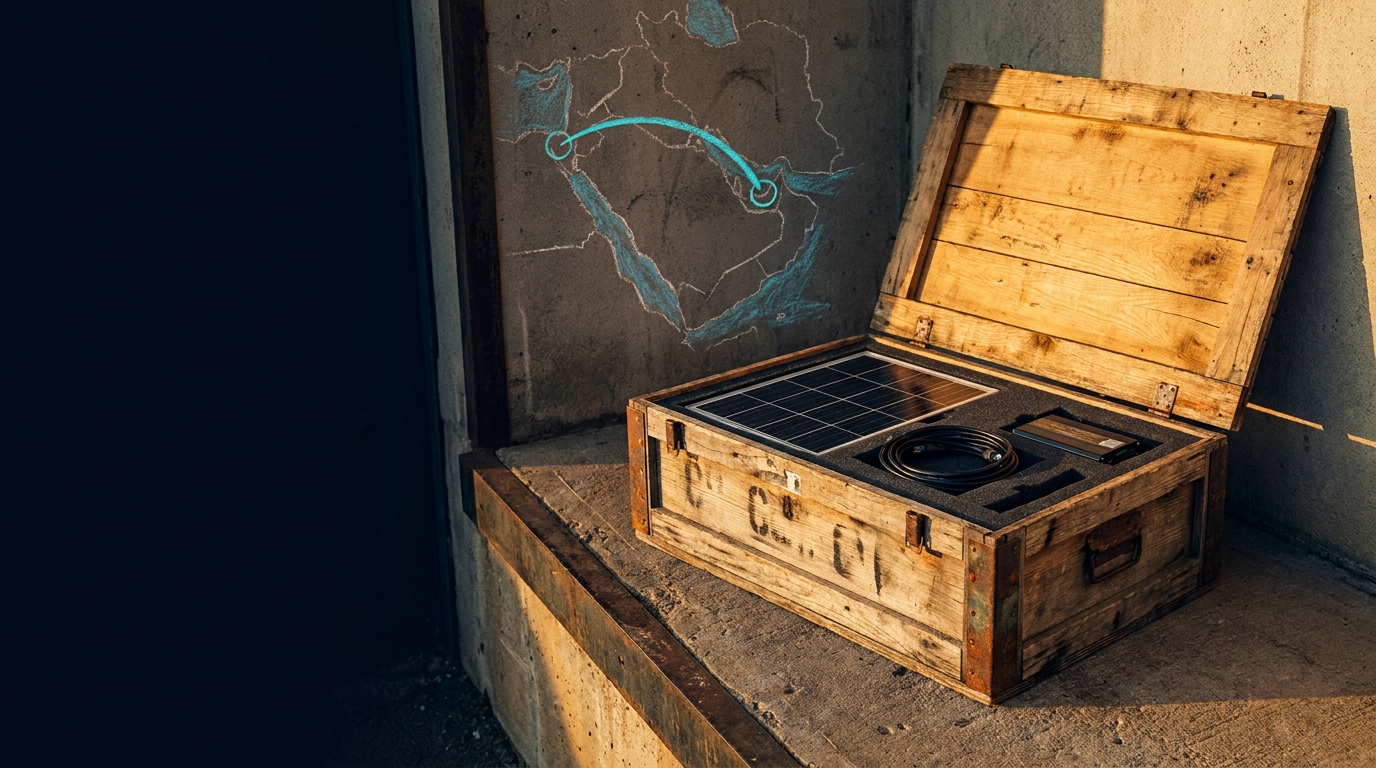
If you have family in Cuba, you already know the blackouts are brutal. Now, for the first time, Cuban customs is letting complete solar systems in duty-free — and Montreal families are quietly becoming the lifeline. Here's exactly how the new rule works and how to ship solar panels to Cuba without getting your shipment stuck at the border.
What changed in February 2026
Cuba published Resolution 41/2026 in the Gaceta Oficial on February 19, 2026. In plain language, it removes import duties on photovoltaic (solar) systems for personal, non-commercial use.
Before this rule, a family sending panels and a battery to a relative in Havana or Santiago would have been hit by the standard progressive tariff — up to 200% for a second import in the same year. Now, that same shipment can cross customs at zero duty, as long as it meets the requirements.
The change matters because Cuba's electricity grid has been running with daily blackouts for years. A single solar kit can keep a fridge, a fan, and a phone charger running through the outages.
What counts as a "complete photovoltaic system"
This is where families trip up. The exemption applies to a complete system presented together — not loose parts scattered across different shipments. According to the resolution, the following components qualify when they arrive as one kit:
- Solar panels (photovoltaic modules)
- Inverters
- Charge controllers
- Lithium or gel batteries
- Mounting structures and hardware
- Transformers
- Distribution panels
- Grounding equipment
Send just a battery on its own, and it goes back under the ordinary tariff. Send the same battery packaged with panels, an inverter, and a controller — clearly labeled as one system — and it enters duty-free.
The "presented together, separately" rule
The parcel must be presented to customs as a distinct package. If the solar kit is mixed in with clothes, food, and toys in one big box, Cuban customs will treat the whole thing as a general shipment and apply normal duties. The kit needs its own box, its own packing list, and its own declaration.
What families in Montreal are actually sending
Most Montreal families aren't shipping industrial-scale arrays. They're sending small "keep-the-lights-on" kits — usually one or two 400W panels, a 1000–3000W inverter, a charge controller, and a lithium battery in the 100Ah range. That's enough to run essential appliances during a blackout.
A typical Montreal family visits a big-box store or a specialty solar retailer, picks a kit, and then hits the same question: how do I actually get this to my mom in Camagüey? The panels are fragile. The battery is heavy and regulated. The paperwork is unfamiliar. And DHL, FedEx, and UPS won't touch a lithium battery bound for Cuba.
How the shipping side works from Canada
Shipping a solar kit from Montreal to Cuba is not the same as mailing a suitcase. There are three things you have to get right: the packaging, the paperwork, and the customs presentation.
1. Packaging
Panels crack. Batteries have specific handling rules for air and sea freight. Inverters have delicate boards inside. Each component needs proper cushioning, and the lithium battery in particular needs compliant labeling. This is not a job for a reused Amazon box.
2. Paperwork
The exemption is not automatic. Customs needs to see that what's arriving is a complete photovoltaic system for personal use. That means:
- An itemized packing list matching every component to Resolution 41/2026 categories
- Invoices or receipts from the Canadian retailer showing the kit was purchased as a system
- A customs declaration filed correctly at both origin and destination
- The mandatory D'Viajeros digital declaration on the Cuban side (dviajeros.mitrans.gob.cu)
3. Presentation to customs
The kit must arrive as one identifiable shipment, separate from any other packages the same family is sending that month. Miss this step and the duty-free treatment can be denied even if every other detail is correct.
What EasyCargo Express handles for you
We ship door-to-door from Montreal, Laval, Brossard, and the surrounding areas to Cuba. For solar systems, that means:
- Free home pickup — we come to you so you're not hauling a battery across the city
- Specialized packaging for panels, inverters, and lithium batteries
- Full customs documentation at origin and destination, prepared to Resolution 41/2026 standards
- Fixed CAD price — the quote is the final price, no fuel surcharges, no surprise duties on arrival
- Basic insurance included, with extended coverage available at roughly 1–3% of declared value (about $20 CAD covers up to $500 CAD)
- 24/7 WhatsApp tracking in Spanish, French, and English — and a delivery confirmation photo when your family opens the box
We're the only service in Montreal legally authorized to ship medicines to Cuba, and we apply the same regulatory rigor to solar shipments. Over 500 completed shipments, 4.9 stars across 120+ verified reviews.
A worked example
Say Maria in Laval buys a 400W panel, a 2000W inverter, a charge controller, and a 100Ah lithium battery from a Canadian solar retailer. Total weight: around 45 kg. Her mother lives in Holguín.
Under the old rules, that shipment would have been treated as a general import and hit with the progressive tariff — potentially hundreds of dollars in Cuban duties, calculated in USD and paid in CUP. Under Resolution 41/2026, packaged and declared correctly as a complete photovoltaic system, the same shipment enters at zero duty.
Maria pays one fixed CAD price to us. Her mother pays nothing on arrival. The panel gets bolted to the roof within a week of delivery.
Common mistakes to avoid
- Splitting the kit across shipments to save on weight — this breaks the "complete system" rule
- Mixing solar components with unrelated items in the same box
- Sending only a battery or only panels and expecting the exemption to apply
- Skipping the D'Viajeros declaration — it's mandatory even for exempt goods
- Using generic couriers that don't know Cuban customs and won't handle lithium batteries
Note that Cuban customs rules evolve by resolution. What's true today under Res. 41/2026 may be adjusted tomorrow, so always confirm the current state of the exemption before you buy the kit.
Ready to send a solar kit to your family?
If you're thinking about buying a solar system for family in Cuba — or you already bought one and it's sitting in your garage — reach out. We'll quote you a fixed CAD price, schedule a free pickup, package everything to survive the trip, and file the paperwork so your shipment clears customs under the new duty-free rule.
Message us any time on WhatsApp at +1 (438) 873-3589 — real humans in Spanish, French, and English, usually replying in under 10 minutes. Or start your quote at easycargoexpress.ca.